By Jeff Remsburg, DC, MS, DACRB
Aging is a natural process, but some aspects of it can be less appealing. The sagging skin, the decreased strength, the seemingly random joint pains, and of course the increased forgetfulness regarding where you put your phone. But perhaps one of the most serious aspects of aging is something we cannot see or feel: decreased bone density.
Once we hit our 40s, our bones tend to lose minerals faster than they can replenish them. As this process continues, it can lead to osteoporosis, where the bone density is significantly lowered and a risk of fracture is high. There are approximately 1.5 million fractures every year in the U.S. due to osteoporosis.(1) Experiencing a fracture as an older individual is a very serious ordeal. In fact, a study showed that individuals aged 65+ who experienced a hip fracture had a three-fold increased risk in dying compared to the general population.(2)
Osteoporosis also leads to compression fractures of the bones in our spine, leading to a “hunchback” presentation that can drastically decrease quality of life. Luckily, there is a treatment for preventing, delaying, and even reversing many age-related changes in our body. Even better, the only side effects to this treatment are improvements in that sagging skin, increased strength and improved joint health. What is this treatment? Resistance training.
What Is Resistance Training?
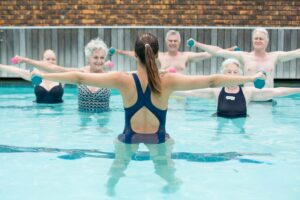
Resistance training is basically a form of exercise where we have to use our muscles to overcome some type of force. Usually that force is gravity, but it can also be a force created by things such as exercise bands. Common “weightlifting” movements such as squats, deadlifts, bench-press and bicep curls all fall into the category of resistance training exercises. These all may sound like intimidating “gym-bro” type exercises, but they can be easily modified for ANY individual. For example, squats can be performed with nothing but body weight and sitting into and up from a chair. Bicep curls can be done with cans of soup or jugs of water. The ways to modify and adapt exercises is almost endless. Perhaps surprisingly, the benefits of resistance training also appear like an endless list.
Resistance training in individuals aged 50+ has been shown to significantly improve bone strength and density, basically reversing the process that leads to osteoporosis.(3,4) Resistance training also decreases our risk for cardiovascular disease (the leading cause of death in the United States) (5). Feeling a little weaker as you age? A six-month program of resistance training increased the strength in older men and women by up to 57%! (6)
So better bones, better heart and stronger muscles, but surely it can’t help with forgetting where you put the phone, right? Wrong! Improved cognitive function is routinely seen after implementing a resistance training program.(7) It has also been shown to improve depression. (8) The list of benefits goes on.
With your new awareness of the benefits of resistance training, the first step forward is to consult your healthcare provider. Many chiropractors are specialists in exercise therapy and can help get you started on a program or connect you with a reputable personal trainer. As with anything new, start slow and gradually increase the repetitions or weights. Work with your chiropractor or trainer if you start to develop any painful injuries. Be consistent and patient. It won’t be long before you start to experience the new and improved version of you!
Dr. Remsburg is an ACA member. He is a staff chiropractor in the Department of Veterans Affairs Health Care System in Prescott, Ariz.
References
- Office of the Surgeon General (US). Bone Health and Osteoporosis: A Report of the Surgeon General. Rockville (MD): Office of the Surgeon General (US); 2004. 5, The Burden of Bone Disease. Available from: https://www.ncbi.nlm.nih.gov/sites/books/NBK45502/
- Panula J, Pihlajamäki H, Mattila VM, Jaatinen P, Vahlberg T, Aarnio P, Kivelä SL. Mortality and cause of death in hip fracture patients aged 65 or older: a population-based study. BMC Musculoskelet Disord. 2011 May 20;12:105.
- Braith RW, Mills RM, Welsch MA, Keller JW, Pollock ML. Resistance exercise training restores bone mineral density in heart transplant recipients. J Am Coll Cardiol 1996; 28(6): 1471-7
- Vincent KR, Braith RW. Resistance exercise and bone turnover in elderly men and women. Med Sci Sports Exerc 2002; 34(1): 17-23.
- Mcleod JC, Stokes T, Phillips SM. Resistance exercise training as a primary countermeasure to age-related chronic disease, 2019; 10(645): 1-11.
- Häkkinen K, Kallinen M, Izquierdo M, et al. Changes in agonist-antagonist EMG, muscle CSA, and force during strength training in middle-aged and older people. J Appl Physiol 1998; 84(4): 1341-9.
- Cassilhas RC, Viana VAR, Grassmann V, et al. The impact of resistance exercise on the cognitive function of the elderly. Med Sci Sports Exerc 2007; 39(8): 1401-7.
- Singh NA, Clements KM, Fiatarone MA. A randomized controlled trial of progressive resistance training in depressed elders. J Gerontol 1997; 52(1): M27-35.